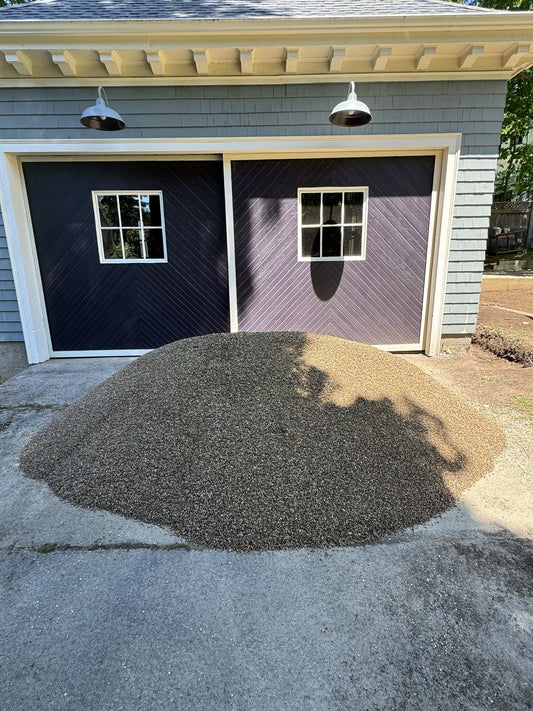
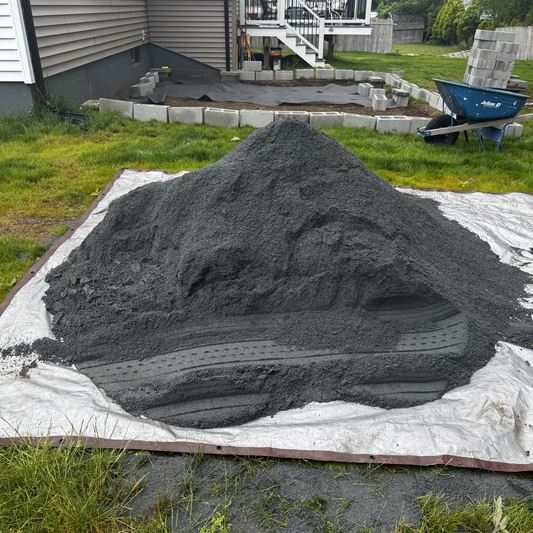
Residents need to get into the lot, park, and walk to their building. Maintenance staff need room to plow, move material, and respond when a route refreezes. Those needs make winter supply an operations decision for an apartment property.
A complex considering 100 cubic yards is planning at a different scale from a homeowner. The number can make sense for a particular property or portfolio, but it should follow records and a site plan.
Is 100 yards the opening order or the whole-season budget?
Write that distinction into the request. A seasonal allowance may arrive in stages. An opening stockpile requires enough storage and equipment to handle the full quantity.
For illustration, a 100-yard seasonal allowance split into five planned stages is 20 yards per stage. That arithmetic is a scheduling example, not a prediction of storm demand or a promised truck capacity.
Keep separate totals for different materials and separate sites. Do not combine yards of salt with yards of sand blend and assume the same winter performance.
What should the property manager measure?
Map the maintained parking area, travel lanes, entrances, service access, and pedestrian connections. Note sections that are excluded from treatment or handled by another contractor.
Then gather:
- Last winter’s deliveries and remaining inventory.
- Material used per treatment, where recorded.
- The number of applications during longer storms.
- Refill lead time and staff responsibilities.
- Storage capacity available without blocking parking or emergency access.
Use the September property manager discussion as background, then build a property-specific plan.
Which material belongs in the reserve?
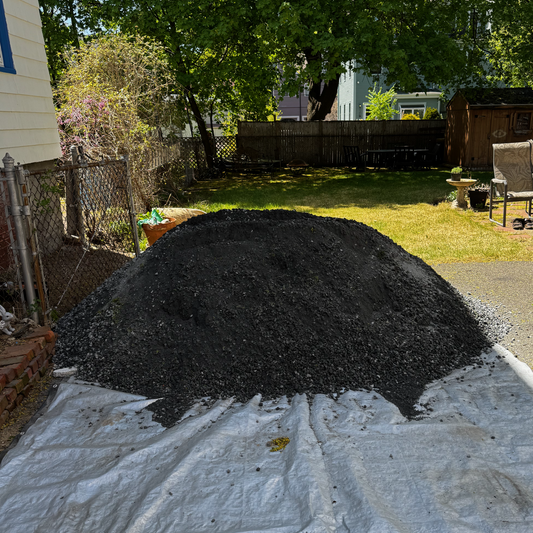
Compare straight rock salt with 50/50 salt-sand. Match the choice to pavement, maintenance equipment, drainage, and the role of added traction. Do not choose solely by the largest quantity offered.
The winter collection shows the current product range. Choose your material first, then work through the quantity and delivery plan.
How do you keep the plan workable?
Assign one person to monitor stock, one reorder trigger, and an alternate contact. Track use after each event so staff can see when the season is running ahead of the original allowance.
Give each delivery a designated approach, unloading location, and contact. MassDOT’s winter operations FAQ provides useful context on how weather and surface conditions affect maintenance decisions.
Start with bulk rock salt or 50/50 salt-sand, then build the quantity and delivery plan around your property. Plan transport and unloading instead of treating 100 yards as one standard delivery.
Frequently asked questions
Does every apartment property need 100 yards?
No. It is an example of a large seasonal plan. Maintained area, material, actual use, and refill strategy determine the need.
Can 100 yards be delivered at once?
Discuss the site, unloading capacity, equipment, and transport arrangements with Ottr. Do not assume a single delivery.
Does stocking salt keep a parking lot usable by itself?
No. Supply supports plowing, treatment, inspection, and an active site maintenance plan.