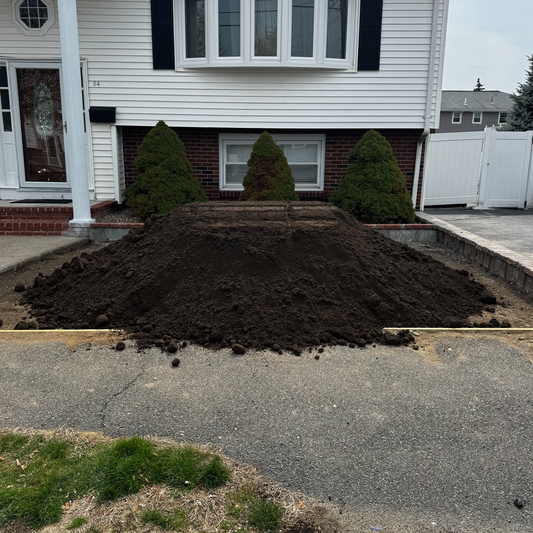
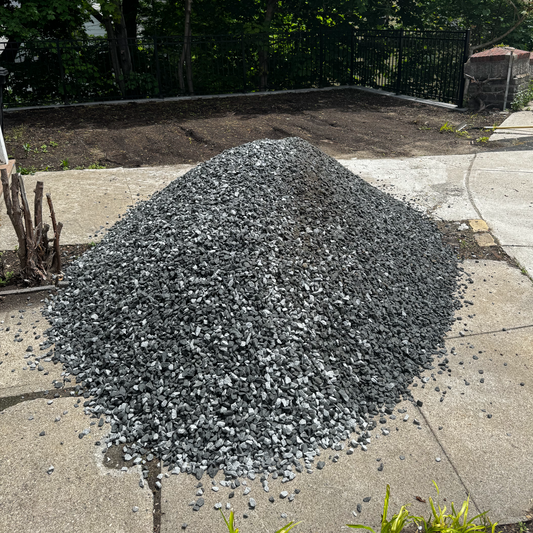
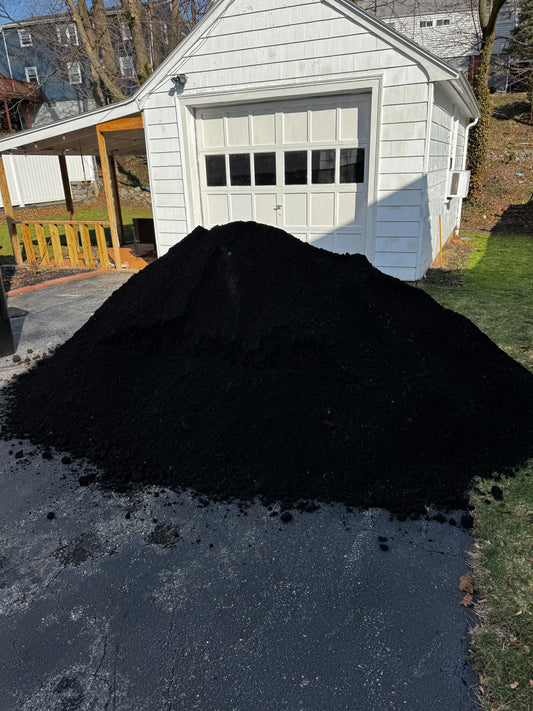
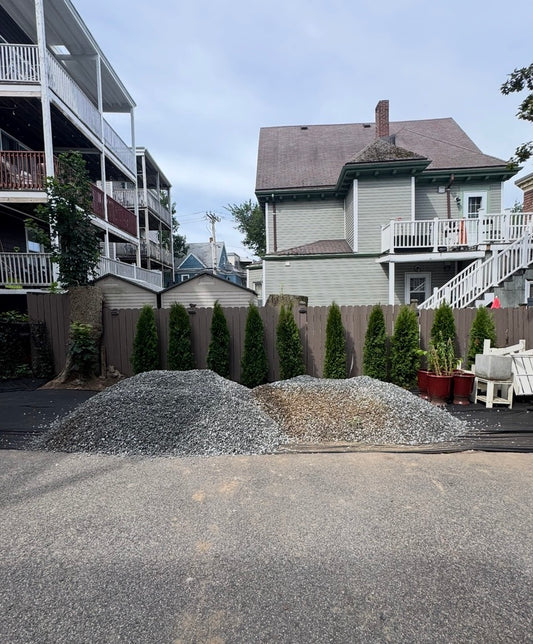
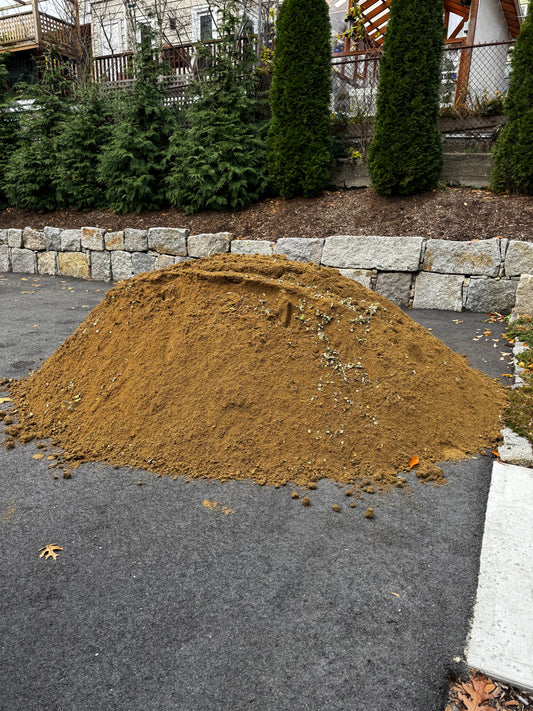
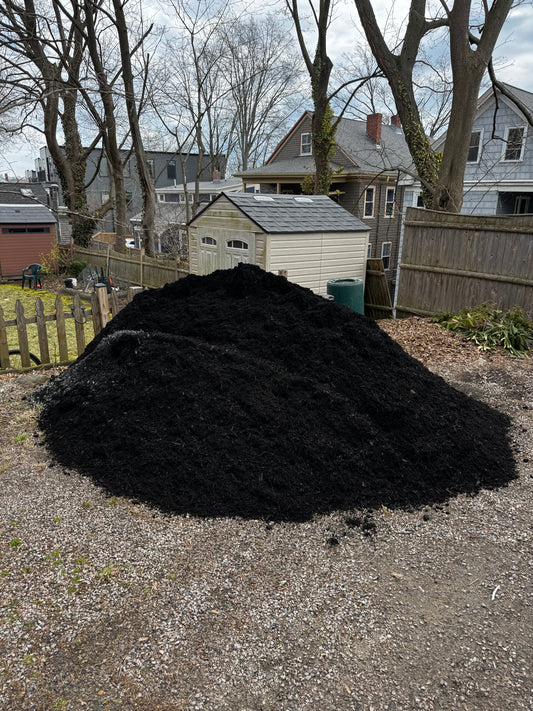
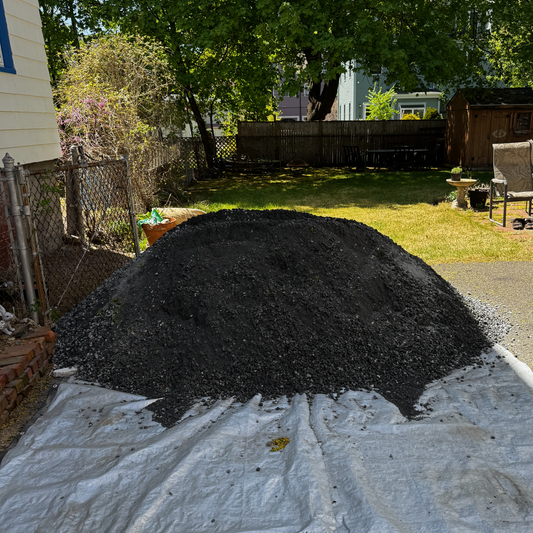
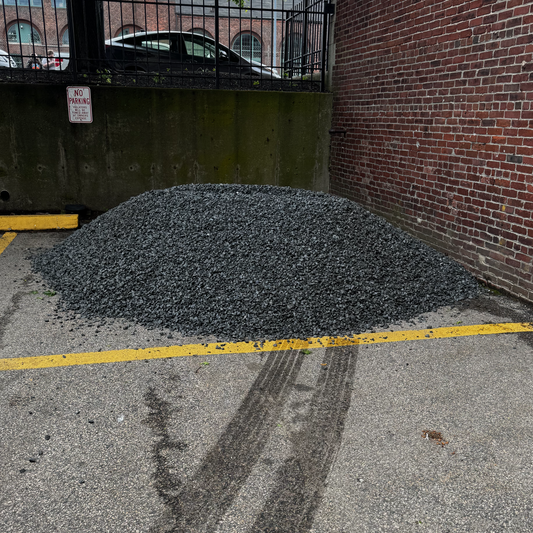
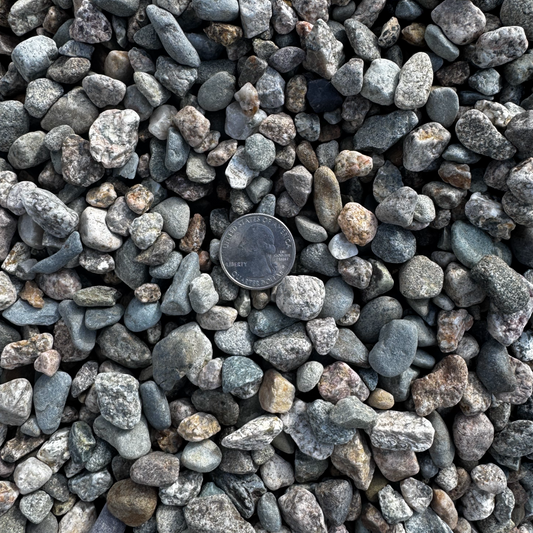
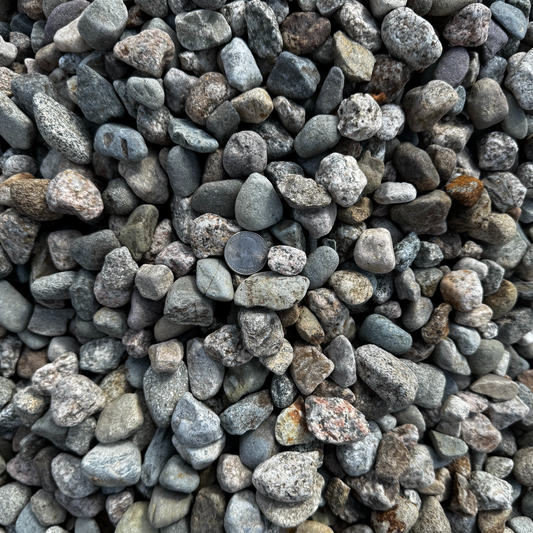
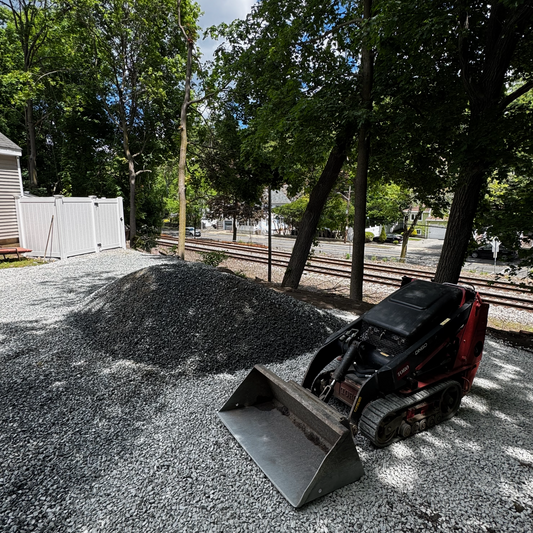
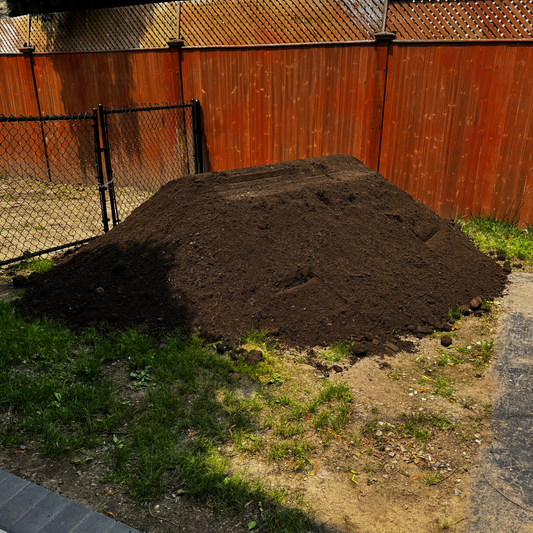
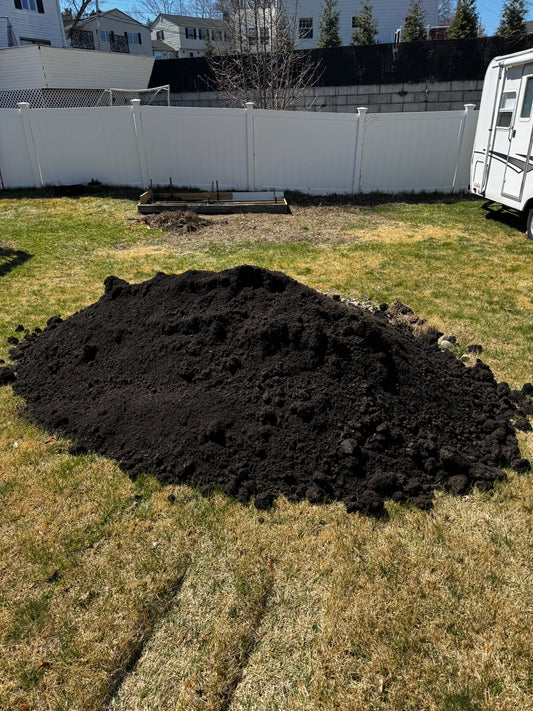
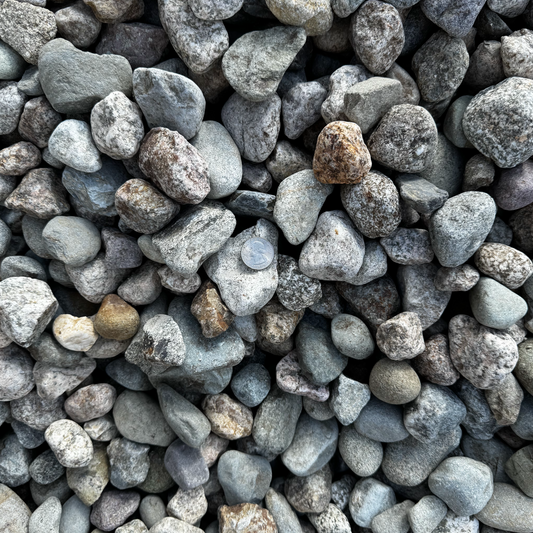
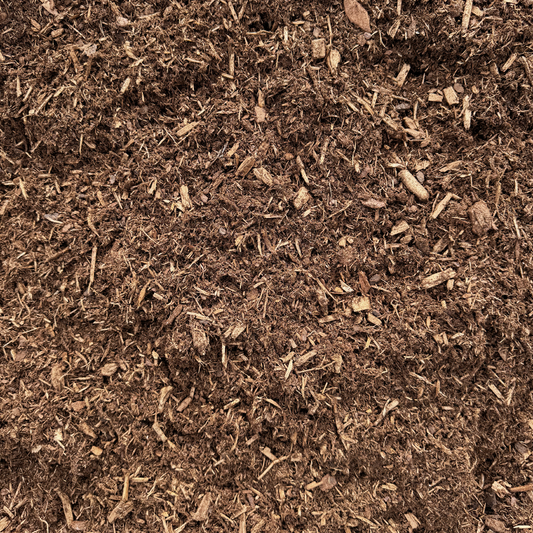
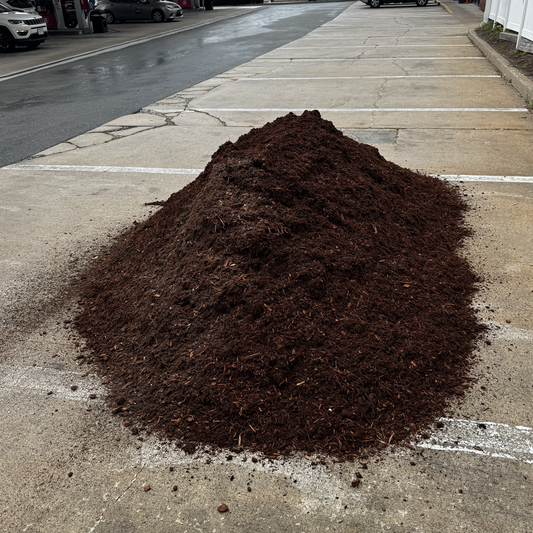
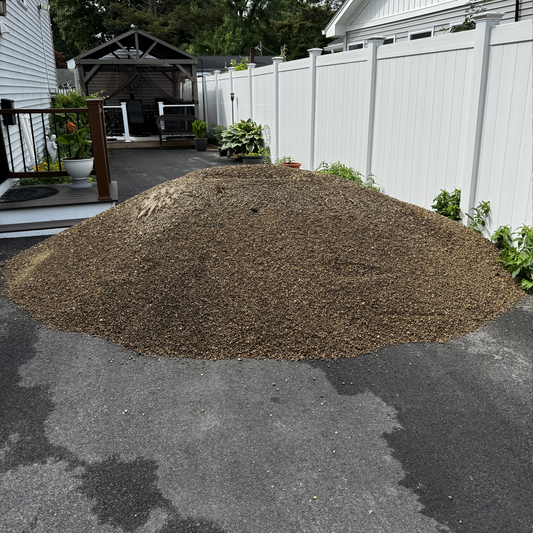
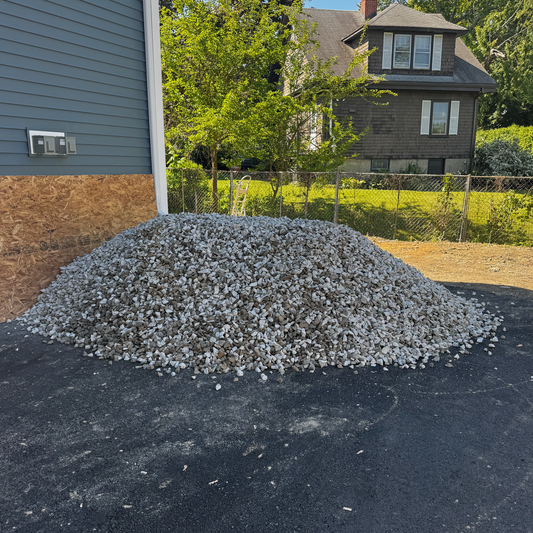
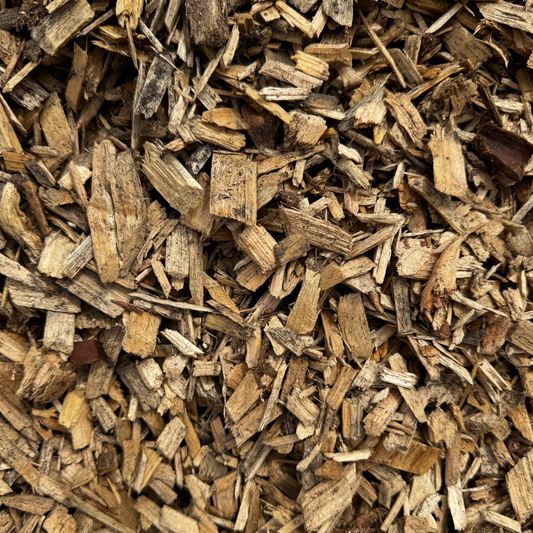
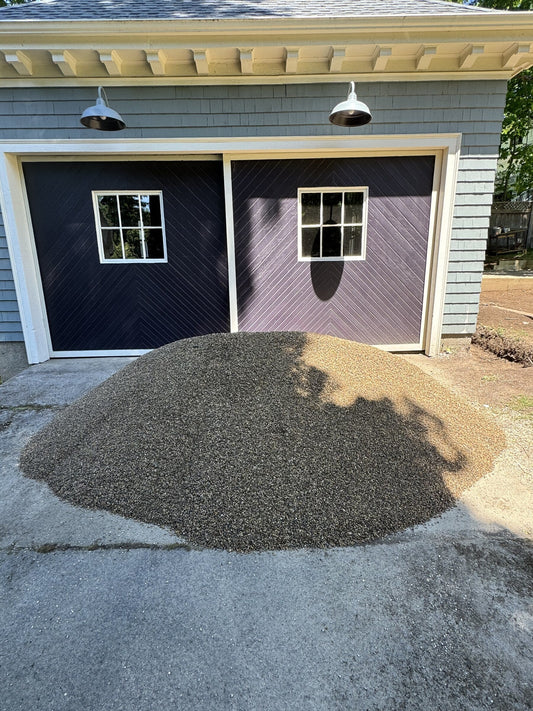
A new patio looks like the easy part of a backyard project — set some pavers, sweep some sand, done. Anyone who's actually built one knows the truth: what's under the pavers is what makes them last. We pulled up to a property in Lowell, MA this week with 4 cubic yards of Paver Sand for exactly that reason. The homeowner had the pavers staged, the base ready to go, and was about a day away from setting the first stone. The sand we dropped is what made everything sitting on top of it possible.
What Paver Sand actually is
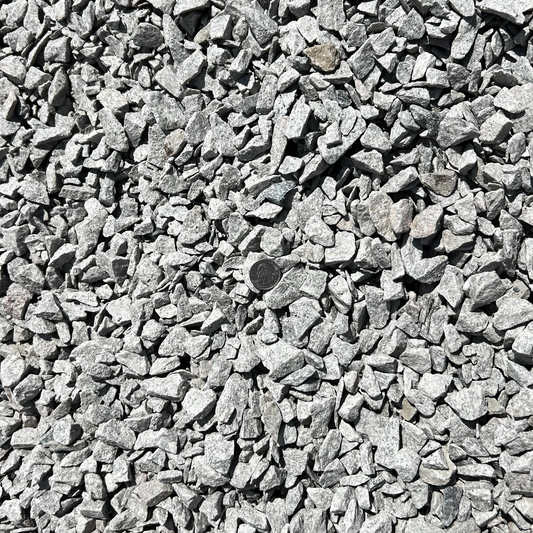
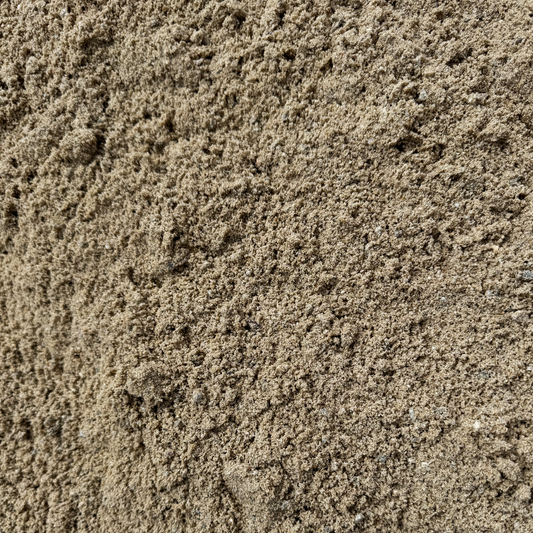
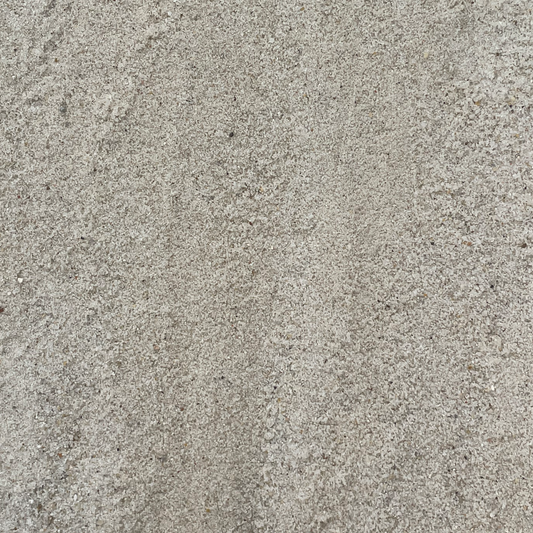
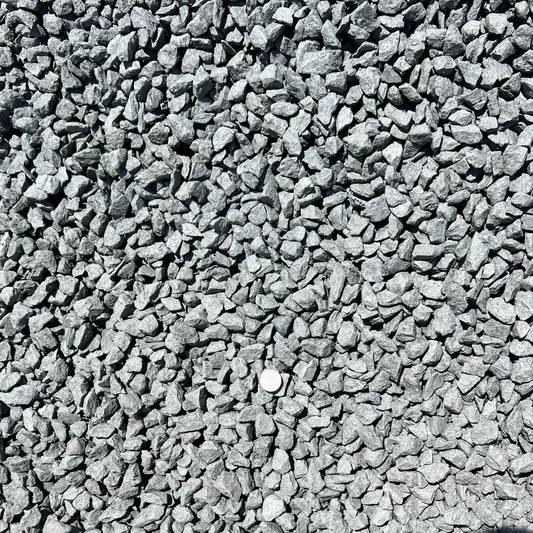
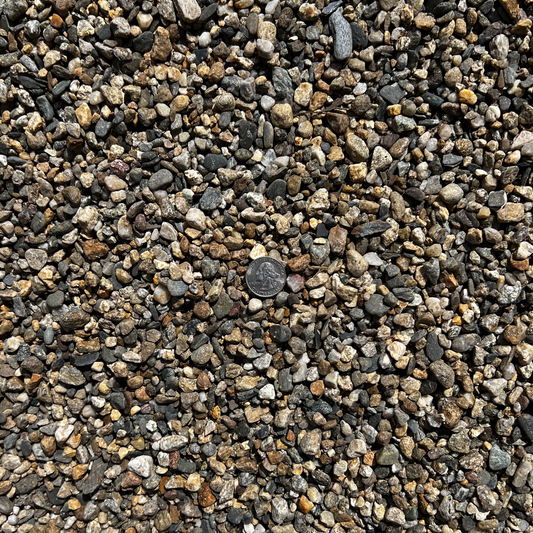
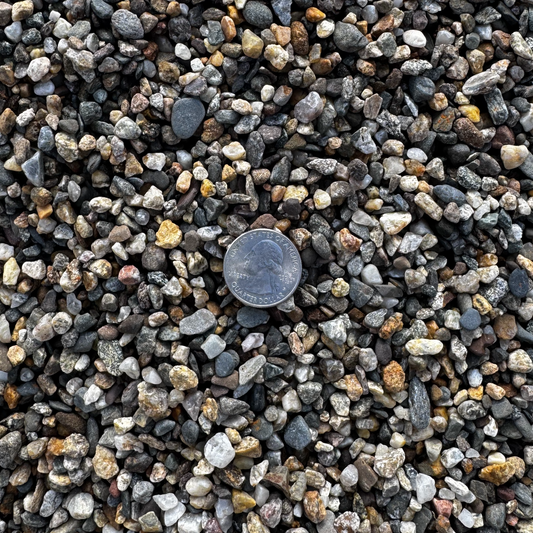
Paver Sand is coarse, angular sand that's washed and screened to a tight particle-size spec — different enough from concrete sand, mason sand, play sand, or beach sand that the wrong substitute will sabotage the install. The two things that matter:
- Angular grains, not rounded. Paver sand particles have sharp edges, which lock together under compaction and resist sliding around when the pavers are loaded with foot traffic, furniture, or a 1,500-lb fire pit. Rounded sand (think beach sand) wants to roll back to flat — exactly the opposite of what you want under stone.
- Coarse but uniform size. Coarse enough to drain well — water moves through and away instead of pooling and freezing under the pavers, which is what cracks patios in Massachusetts winters. Uniform enough that you can screed it dead level with a straightedge and have confidence the pavers will sit where you put them.
This material is sometimes called "setting sand," "bedding sand," or "concrete sand (washed)" depending on the supplier and the spec sheet. Some installers blend it slightly differently for different projects, but the goal is always the same: a stable, level, draining layer for the pavers to sit on.
It is NOT the same as polymeric sand (the dust-fine sand that gets swept into the joints between pavers after they're set, then misted to activate a binder). That's a finishing material; this is the bed.
Where Paver Sand fits in a patio install
For the Lowell project above — and any standard residential paver patio — the layer cake from the ground up looks like this:
- Excavate the patio footprint to 8–10" below finished grade. Residential pavers need enough room for the base + bedding + paver thickness.
- Compact the subgrade with a plate compactor. This is the foundation everything else sits on. Soft subgrade = sunken patio in 3 years.
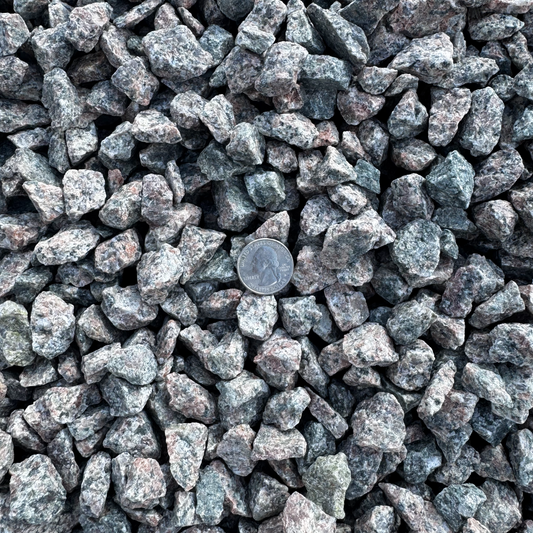
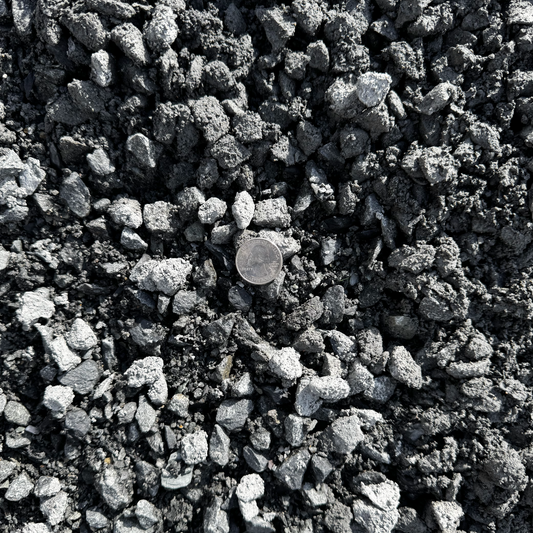
- Lay 4–6" of crushed stone base (typically ¾" minus or a processed gravel like "process gravel"). Compact in 2" lifts so it's actually dense, not just dumped.
- Screed 1" of Paver Sand over the compacted base. This is the layer that lets you fine-tune the level and gives the pavers something forgiving to seat into. Don't go thicker than 1.5" — thicker sand layers let pavers shift over time.
- Set the pavers dry into the sand. Tap them down with a rubber mallet to seat them.
- Sweep polymeric sand into the joints, mist to activate the binder.
- Run the plate compactor over the finished surface (with a rubber mat to protect the paver faces).
Step 4 is where this delivery lives — that 1" bedding layer is the entire reason Paver Sand exists as a separate product.
Coverage math: how much you actually need
The numbers that matter:
- 1 cubic yard of Paver Sand covers ~324 square feet at 1" depth (the typical bedding thickness).
- A common residential patio is 200–400 sq ft. At 1" depth, that's roughly 0.6–1.2 yards of bedding sand for the patio itself.
- So why did the Lowell customer order 4 yards? Because most paver projects need sand in more places than just under the pavers. You'll typically use it for:
- Bedding under the pavers (the main 1" layer, ~1–2 yards on a typical residential job)
- Backfilling the perimeter edge restraint (the plastic or aluminum edging that locks the outer course)
- Joints between pavers (you can sweep regular paver sand into joints instead of polymeric if you're going for a more natural look — the trade-off is more weed potential)
- Leveling adjustments and overflow for the inevitable spots that need a second pass
- Backup material — running out of sand mid-install with the pavers staged is a bad day, and freight on a second small delivery costs more than ordering a bit extra the first time
- A safe rule of thumb: plan on 3–5 yards for any residential patio install with pavers staged, even if the patio itself is small. You'll use it.
Why this matters in Lowell and across the Merrimack Valley
Lowell yards run the full spectrum — historic triple-deckers in the Highlands, Acre, Centralville, and Pawtucketville neighborhoods, the older single-family homes on Belvidere and Wigginville, the denser blocks near downtown (01852), and the leafier suburban edges into the Centralville (01850), Pawtucketville (01854), and South Lowell (01851) sides. The common challenge: older yards with mixed soil and a lot of seasonal frost heave.
Paver patios in this region live or die by drainage. Our winters cycle through enough freeze-thaw events that water trapped under a patio will lift pavers, crack pavers, and tilt the whole surface within a few seasons. Coarse paver sand on top of a properly-compacted crushed stone base lets that water move through and out — the patio stays where you set it.
We deliver Paver Sand by the cubic yard across Lowell and the surrounding Merrimack Valley towns — Chelmsford, Dracut, Tewksbury, Tyngsborough, Westford, Billerica, Andover, North Andover, Methuen, Lawrence, Haverhill, plus the close-in inner suburbs of Middlesex County and parts of Essex County. If you're working a hardscape project anywhere in this corridor, we're likely already in your neighborhood on a delivery day.
How delivery works
We drop Paver Sand by the cubic yard wherever you direct on your driveway or yard, ideally as close to the patio site as the truck can safely reach. For paver projects that are running on a tight install timeline (pavers staged, plate compactor rented for the weekend), we can usually flex the delivery window to match your start date — text or call us when you're ready and we'll work it in.
Per truck capacity, paver sand ships at up to 6 cubic yards per truck, so a 4-yard order ships in one truck.
Ready to build a patio?
Whether you're laying a paver patio in Lowell, a walkway in Chelmsford, a fire pit pad in Dracut, or a full backyard hardscape in Tewksbury, order Paver Sand online and we'll get it to your site. Not sure how much you need? Text us with your patio dimensions and we'll do the math with you — buying once is always cheaper than buying twice.