Quick Answer
Top five decorative stones for Suffolk County fall beds (Boston, Chelsea, Revere, Winthrop): White Marble Rock ¾" for bright contrast and winter visibility, Riverbed Rock ¾" for natural-look beds, Mixed-Color Granite Rock ¾" for varied texture and value, Blue Stone Rock ¾" for cool-tone modern designs, and Brown Stone Rock ¾" for warm-tone pairings with brick and warm-stone architecture. All five at $85–110 per cubic yard typical, all available bulk-delivered through Ottr's Suffolk County routes. Best installation window: September 25 through October 25 before freeze-thaw season.
Why Decorative Stone Choices Matter More in Fall
Decorative stone shows most in winter. After leaves drop, mulch fades, and perennials cut back, the stone is what the bed reads as for 4–5 months. Choosing the right stone in September means walking through a January yard that still looks intentional. Choosing wrong means looking at a tired-gray pile until April.
Suffolk County yards span Boston brownstones, Chelsea triple-deckers, Revere coastal lots, and Winthrop ocean-edge homes — five different architectural contexts. Stone choice should match.
For the related Waltham pea-vs-river-rock review with similar logic, see Pea Stone vs River Rock for Waltham Fall Beds. For the Westwood drainage-upgrade list that often pairs with stone work, Top 5 Drainage Upgrades Before Fall Rains in Westwood.
1. White Marble Rock ¾"
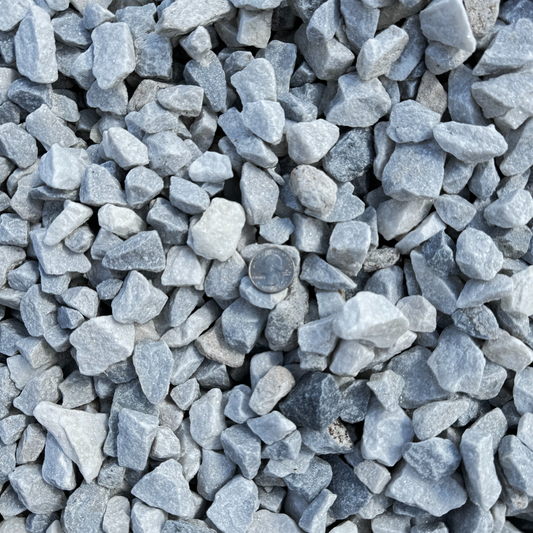
Profile: Bright white, angular ¾-inch stone. Typical price: $90–105/yd. Best for: Front-entry beds, foundation accents, foundation-line definition, snowfall-camouflage zones. Suffolk County wins: Reads boldly against Boston brownstone facades, Chelsea brick three-deckers, and Winthrop ocean-edge weathered shingle. Holds visibility through winter even under light snow. Loses on: Stains slightly from organic debris (leaves, mulch washover), needs cleaning every 2–3 years.
Browse the decorative stone collection for current White Marble Rock pricing.
2. Riverbed Rock ¾"
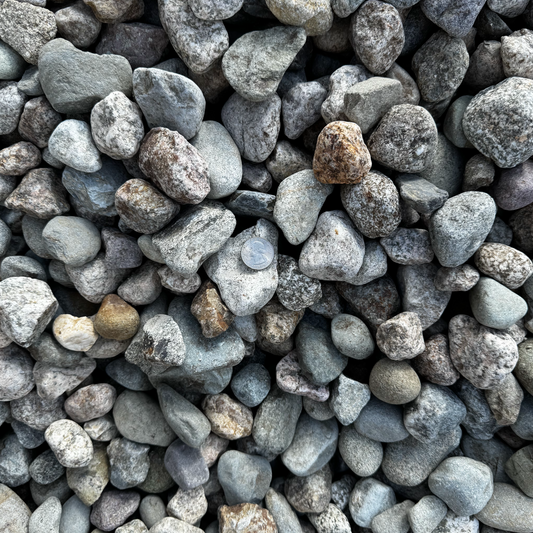
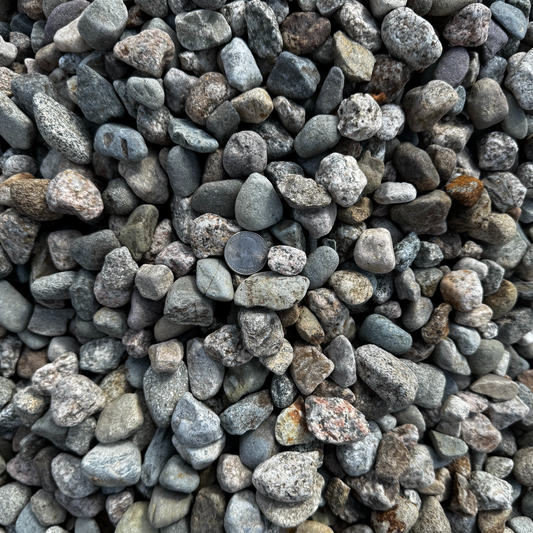
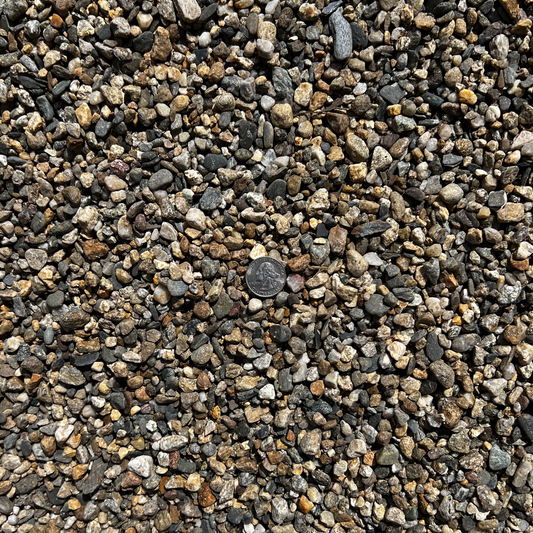
Profile: Smooth, rounded ¾-inch multi-color natural stones. Typical price: $85–100/yd. Best for: Natural-look beds, cottage gardens, wooded backyards, dry-stream design features. Suffolk County wins: Pairs with mature plantings in older Boston neighborhoods (Roslindale, JP, West Roxbury). Coastal weathered look fits Winthrop oceanfront yards. Loses on: Less dramatic visual impact than angular stones, can read as "garden variety" in formal settings.
Available through the decorative stone collection — the Boston landscape supply routes deliver locally for Suffolk County.
3. Mixed-Color Granite Rock ¾"
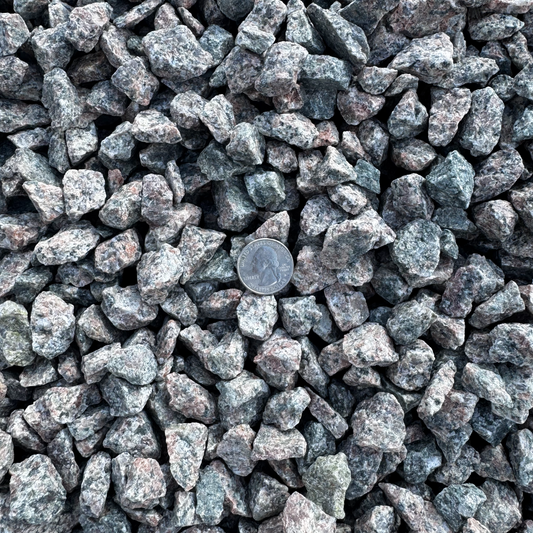
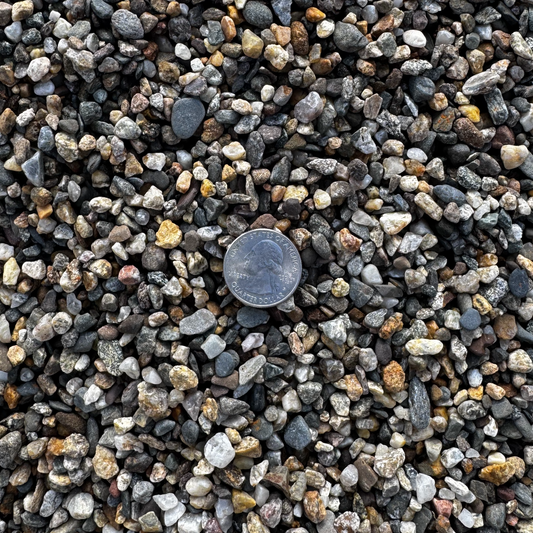
Profile: Angular ¾-inch granite in mixed gray, tan, pink, and black tones. Typical price: $85–95/yd. Best for: Beds wanting texture variation, modern landscape designs, properties with stone walls. Suffolk County wins: Echoes the fieldstone walls common in older Roxbury and Mattapan neighborhoods. Texture variety reads premium without premium price. Loses on: Can compete with showy plantings, busy in small beds.
4. Blue Stone Rock ¾"
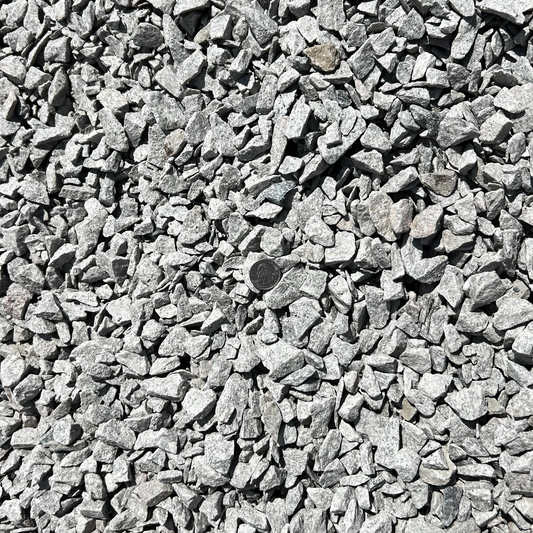
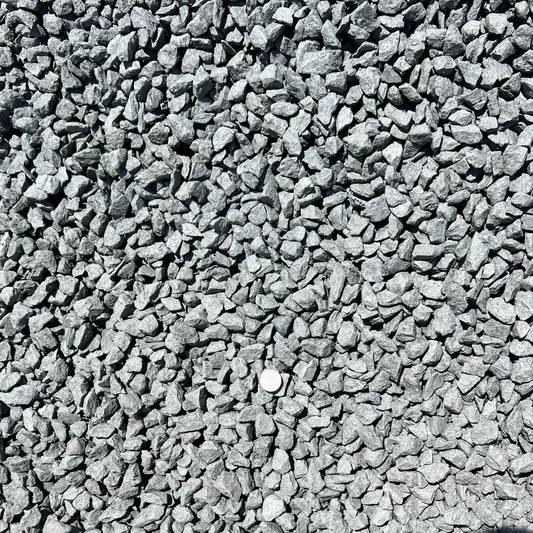
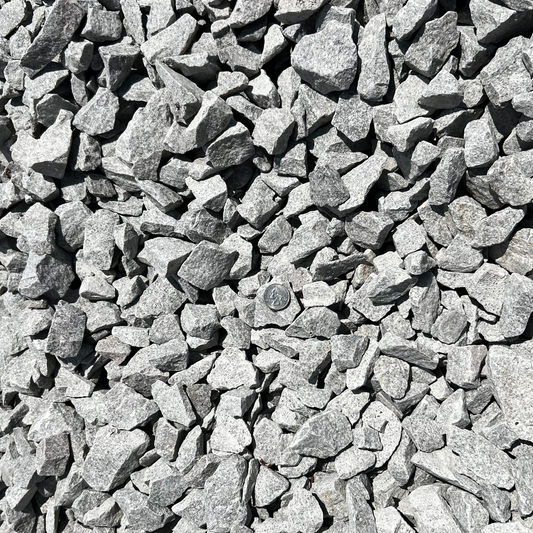
Profile: Angular ¾-inch blue-gray stone (also available in ⅜" and ½"). Typical price: $90–105/yd. Best for: Cool-tone modern designs, blue-spruce companion plantings, contemporary architecture. Suffolk County wins: Pairs beautifully with painted-blue trim common in Winthrop coastal homes and modern Chelsea renovations. Cool tone reads sophisticated. Loses on: Cool tone clashes with warm-toned brick architecture.
5. Brown Stone Rock ¾"
Profile: Warm-brown ¾-inch stone (also available in ⅜"). Typical price: $90–100/yd. Best for: Brick-architecture pairings, warm-tone landscape designs, traditional brownstone settings. Suffolk County wins: Specifically designed for the Boston brownstone aesthetic — Back Bay, South End, Beacon Hill brick architectures. Reads continuous with the building palette. Loses on: Less dramatic seasonal contrast — disappears against fall leaf litter.
How Much to Order
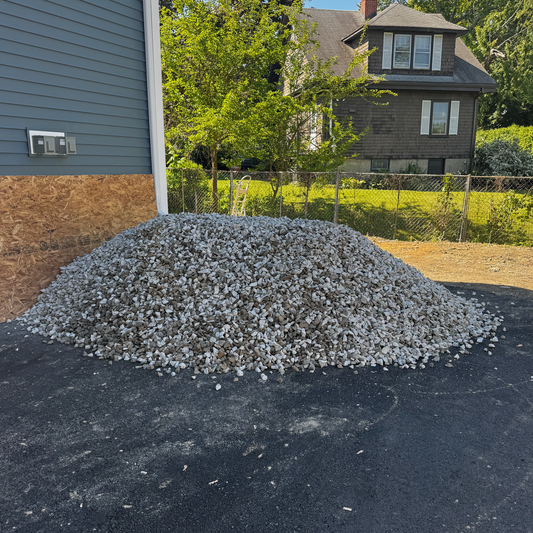
Standard fall installation: - Foundation accent (small): 30 sq ft × 3" deep = 0.3 cubic yards - Mid-size accent bed: 60 sq ft × 3" deep = 0.5 cubic yards - Front entry walk margin: 100 sq ft × 3" deep = 1 cubic yard - Foundation perimeter (whole house): 250–400 sq ft × 3" deep = 2.5–4 cubic yards
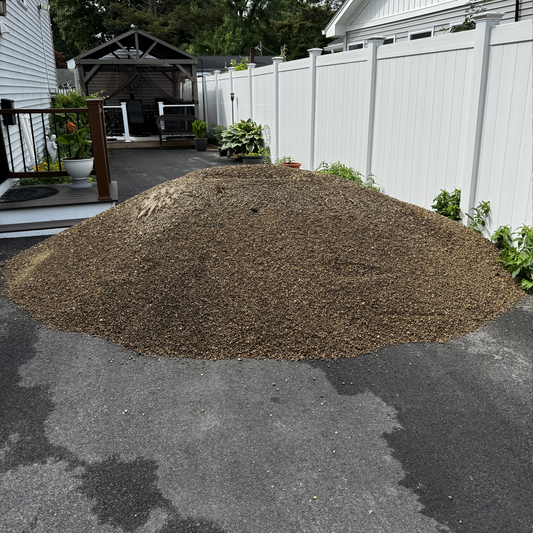
For Suffolk County addresses, the Boston landscape supply routes serve Boston, Chelsea, Revere, and Winthrop. Lead time on bulk delivery through October is currently 5–7 days — order ahead.
Installation Basics
For all five: 1. Excavate the bed area to 3 inches depth 2. Lay landscape fabric (overlap seams 6 inches) 3. Add 3 inches of decorative stone 4. Rake to level 5. Edge-restraint with metal or paver edging if adjacent to lawn
For larger beds, the same process scales. For the related fall hardscape touch-up scope, see 5 Fall Hardscape Touch-Ups for Roslindale Backyards.
Suffolk County-Specific Notes
- Boston brownstones (Back Bay, Beacon Hill, South End) — Brown Stone Rock ¾" matches the architecture; check historic district restrictions on visible exterior changes
- Chelsea triple-deckers — White Marble Rock ¾" reads cleanly against red brick
- Revere and Winthrop oceanfront — All five work; salt spray weathers all stones equally over years
- Boston public housing and dense neighborhoods — Mixed-Color Granite Rock ¾" is the value choice for budget-conscious large installs
The UMass Extension Landscape, Nursery & Urban Forestry program has the authoritative reference on regional landscape design and plant-stone pairing.
What This Means for You
Pick the stone that matches your architecture and read it through January. Order through the Boston landscape supply routes for Suffolk County delivery — Boston, Chelsea, Revere, Winthrop. Browse the decorative stone collection for full pricing on White Marble, Riverbed Rock, Mixed-Color Granite, Blue Stone, and Brown Stone in ¾-inch.
For the related Waltham pea-vs-river review, see Pea Stone vs River Rock for Waltham Fall Beds. For the September mulch demand context, September Mulch Demand in Norfolk County — same calendar pressures.