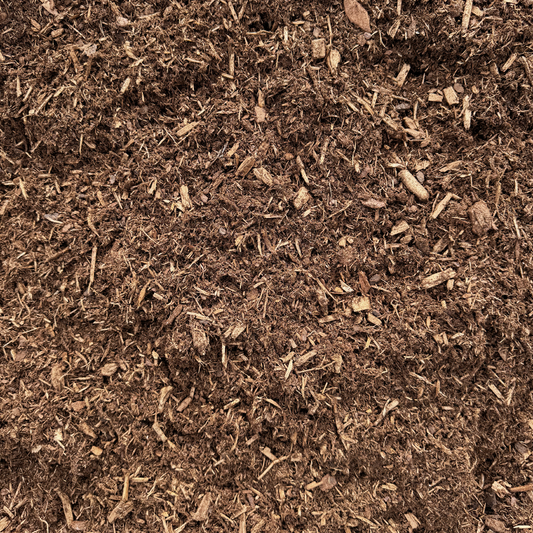
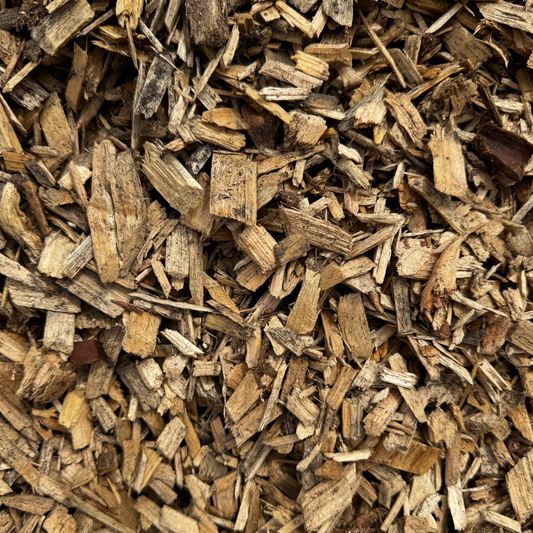
Mulch types differ in three things that matter for your beds: how long they last (lifespan), how they affect soil chemistry (acidity), and how they look (color stability). The right pick depends on whether you prioritize longevity, plant health, or curb appeal.
Lifespan and color stability by type
| Mulch type | Lifespan | Color holds | Soil effect | Best for |
|---|---|---|---|---|
| Hemlock | 10–12 mo | ~8 mo (natural fade to gray) | Slight acidification | NE classic, all-purpose beds |
| Pine Bark | 12+ mo (chunky) | 10–12 mo | Acidifies soil | Slopes, around acid-loving plants (azaleas, rhododendrons, blueberries) |
| Red Cedar | 12+ mo | 10+ mo | Mild repellent (deters some insects) | Around foundations, high-traffic beds |
| Black (color-enhanced) | ~9 mo | 6–9 mo (some fade) | Neutral | High-contrast curb appeal, modern landscaping |
| Brown / Red (color-enhanced) | ~9 mo | 6–9 mo | Neutral | Warm tones, traditional landscaping |
How to choose by use case
- Longest-lasting: Pine bark or red cedar. Plan to refresh once a year vs every spring.
- Best for plant health: Hemlock or pine bark — the natural decomposition adds organic matter to soil.
- Best curb-appeal pop: Black mulch for high contrast against green foliage; brown for warmer traditional looks.
- Around acid-loving plants: Pine bark (acidifies as it decomposes).
- Pet-safe / playground use: Playground Mulch (Certified) — specifically tested for safety. Avoid cocoa hull mulch (toxic to dogs).
How much do you need?
1 cubic yard covers ~100 sq ft at 3" depth. Standard residential refresh is 3" depth over existing beds. For a 500 sq ft bed, plan on 5 cubic yards. See our mulch weight guide for the full coverage and tonnage math.
Browse the full mulch collection to compare types and order delivery.