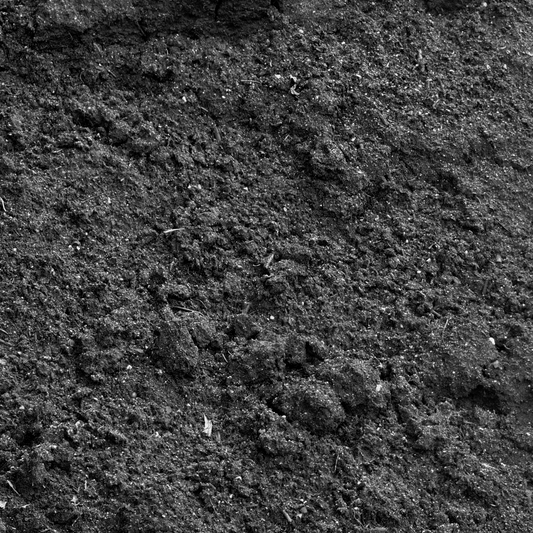
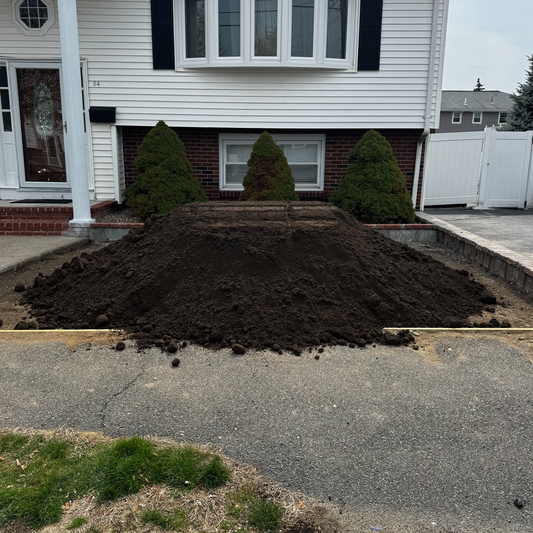
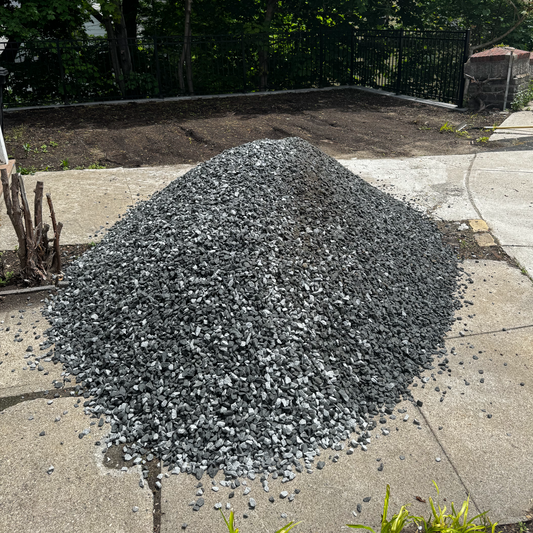
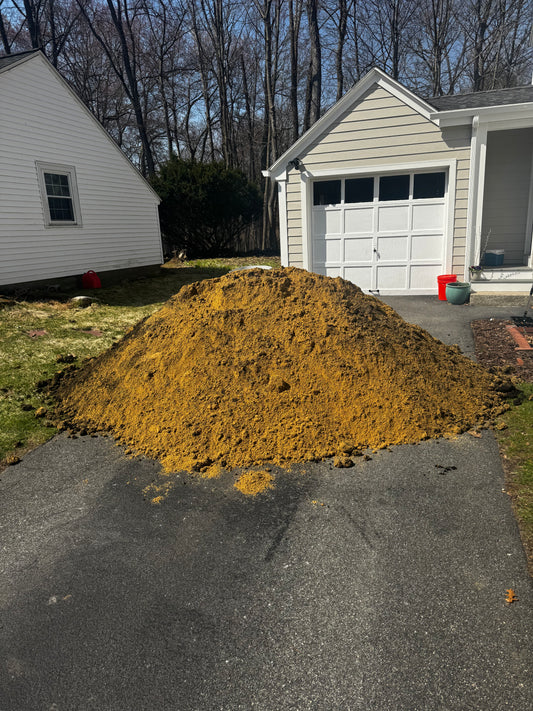
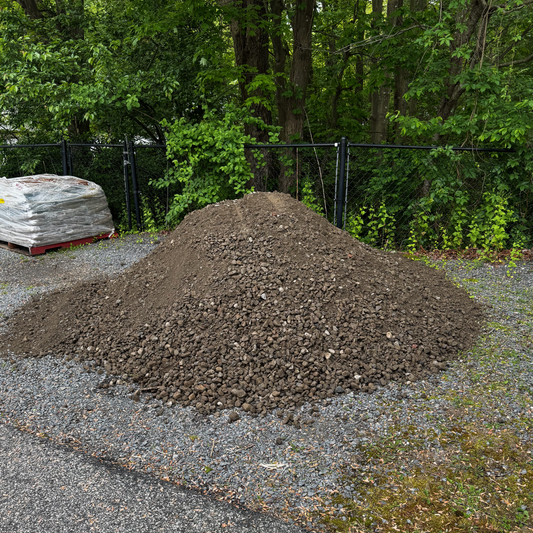
If you've ever ordered bulk landscape materials, you've probably wondered: how much does a yard of dirt weigh? It's not just a trivia question — the answer affects how much your truck can carry, how many loads you need, and whether your driveway can handle the delivery.
Here's the short answer: one cubic yard of dirt weighs between 2,000 and 2,700 pounds, depending on the type of dirt and its moisture content. But there's more to the story.
What Is a Cubic Yard?
A cubic yard is a unit of volume equal to a cube measuring 3 feet on each side — 3 ft × 3 ft × 3 ft = 27 cubic feet. It's the standard unit used when ordering bulk landscape materials like topsoil, fill dirt, gravel, and mulch.
When landscapers and contractors talk about "a yard of dirt," they always mean a cubic yard.
How Much Does a Yard of Dirt Weigh?
The weight of a cubic yard of dirt varies based on the type:
| Type of Dirt | Weight per Cubic Yard |
|---|---|
| Dry topsoil | ~2,000 lbs (1 ton) |
| Moist topsoil | ~2,200–2,400 lbs |
| Wet/saturated topsoil | ~2,600–2,700 lbs |
| Fill dirt (dry) | ~2,000–2,100 lbs |
| Fill dirt (moist) | ~2,300–2,500 lbs |
| Clay-heavy soil | ~2,500–3,000 lbs |
| Sandy loam | ~1,900–2,100 lbs |
As a general rule of thumb, plan for approximately 2,200 pounds (just over 1 ton) per cubic yard of typical moist topsoil or fill dirt. This is the figure most landscape suppliers and contractors use for load planning.
Why Does Moisture Content Matter So Much?
Water is heavy — about 8.3 pounds per gallon. Soil naturally holds a lot of it, especially after rain or during New England springs. A cubic yard of saturated topsoil can weigh 30–35% more than the same volume of dry material.
This matters for two reasons:
1. Delivery capacity. At Ottr Landscape Supply, our trucks carry up to 6 cubic yards per load for dense materials like topsoil and fill dirt. If material is unusually saturated, the actual delivered volume may be slightly less to stay within safe weight limits for road transport.
2. Your project math. If you're calculating coverage based on weight rather than volume, moisture will skew your estimates. Always order by cubic yard, not by the ton, when buying landscape soil.
How Much Does 1 Cubic Yard of Dirt Weigh vs. Multiple Yards?
Here's a quick reference for common order sizes:
| Cubic Yards | Estimated Weight |
|---|---|
| 1 yard | ~2,200 lbs |
| 2 yards | ~4,400 lbs |
| 3 yards | ~6,600 lbs |
| 6 yards (1 full load) | ~13,200 lbs |
| 10 yards | ~22,000 lbs |
A single full load from Ottr (6 yards) weighs about 6.5 tons. That's why professional delivery equipment matters — this material should never be hauled in a pickup truck or trailer not rated for the weight.
Does the Type of Soil Change the Weight a Lot?
Yes, significantly. Here's what affects dirt weight per cubic yard:
- Organic matter: Rich topsoil with lots of organic content tends to be lighter and fluffier than compacted subsoil.
- Clay content: Clay is denser than sand or silt. Heavy clay soils can approach 3,000 lbs per cubic yard.
- Compaction: Loose, freshly screened topsoil weighs less than the same material after it's been compacted in a truck bed.
- Rocks and debris: Fill dirt often contains small stones, concrete chunks, or other material that increases average density.
When you're ordering screened loam or premium topsoil from a reputable supplier, you can expect consistent quality and predictable weight in the 2,000–2,400 lb range.
What This Means When You Order in Massachusetts
In Greater Boston and across Massachusetts, bulk soil delivery has some unique considerations:
Road weight limits. Massachusetts enforces strict road weight limits, especially on residential streets and during spring frost season (typically March through May). During spring posting, load limits on many local roads drop significantly, which can affect delivery scheduling.
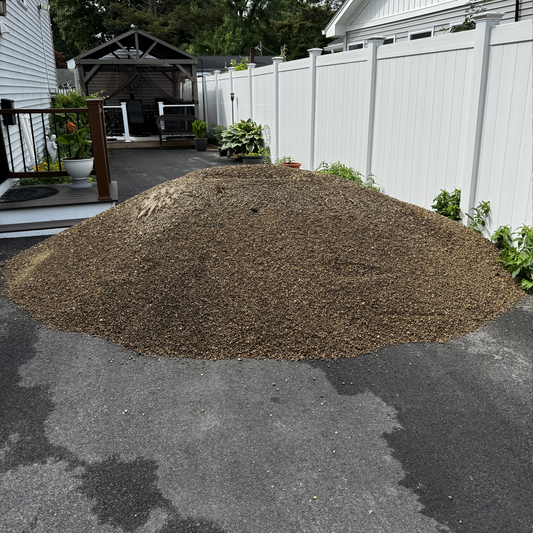
Driveway access. Before ordering, make sure your driveway and access path can support a fully loaded delivery truck. Six yards of moist topsoil weighs over 13,000 lbs — and that's before accounting for the truck itself.
Hillside and tight-access properties. Many Greater Boston neighborhoods — from Dorchester and Milton to Needham and Norwell — have narrow streets, steep grades, or limited turnaround space. Always share access details when ordering so your driver can plan accordingly.
How to Calculate How Many Yards of Dirt You Need
Use this formula:
Volume (cubic yards) = Length (ft) × Width (ft) × Depth (ft) ÷ 27
For example, if you're filling a 20 ft × 10 ft garden bed to 6 inches (0.5 ft) deep:
20 × 10 × 0.5 = 100 cubic feet ÷ 27 = 3.7 cubic yards
Round up to 4 yards to account for settling and compaction — soil typically settles 10–15% after delivery.
Use our free Landscape Materials Calculator for instant results.
Ready to Order Topsoil or Fill Dirt in Greater Boston?
Ottr Landscape Supply delivers bulk topsoil, fill dirt, and loam across Suffolk, Norfolk, Plymouth, and Middlesex Counties with same-day delivery available. Our flat $100 delivery fee covers up to 6 cubic yards per load for dense materials.
Ottr Landscape Supply is a female-owned, family-run bulk landscape materials business serving Greater Boston, MA. We deliver topsoil, fill dirt, gravel, mulch, sand, and decorative stone to 315+ service areas across Massachusetts.